
How to Improve Handwriting: The Hidden Building Blocks Every Parent Should Know
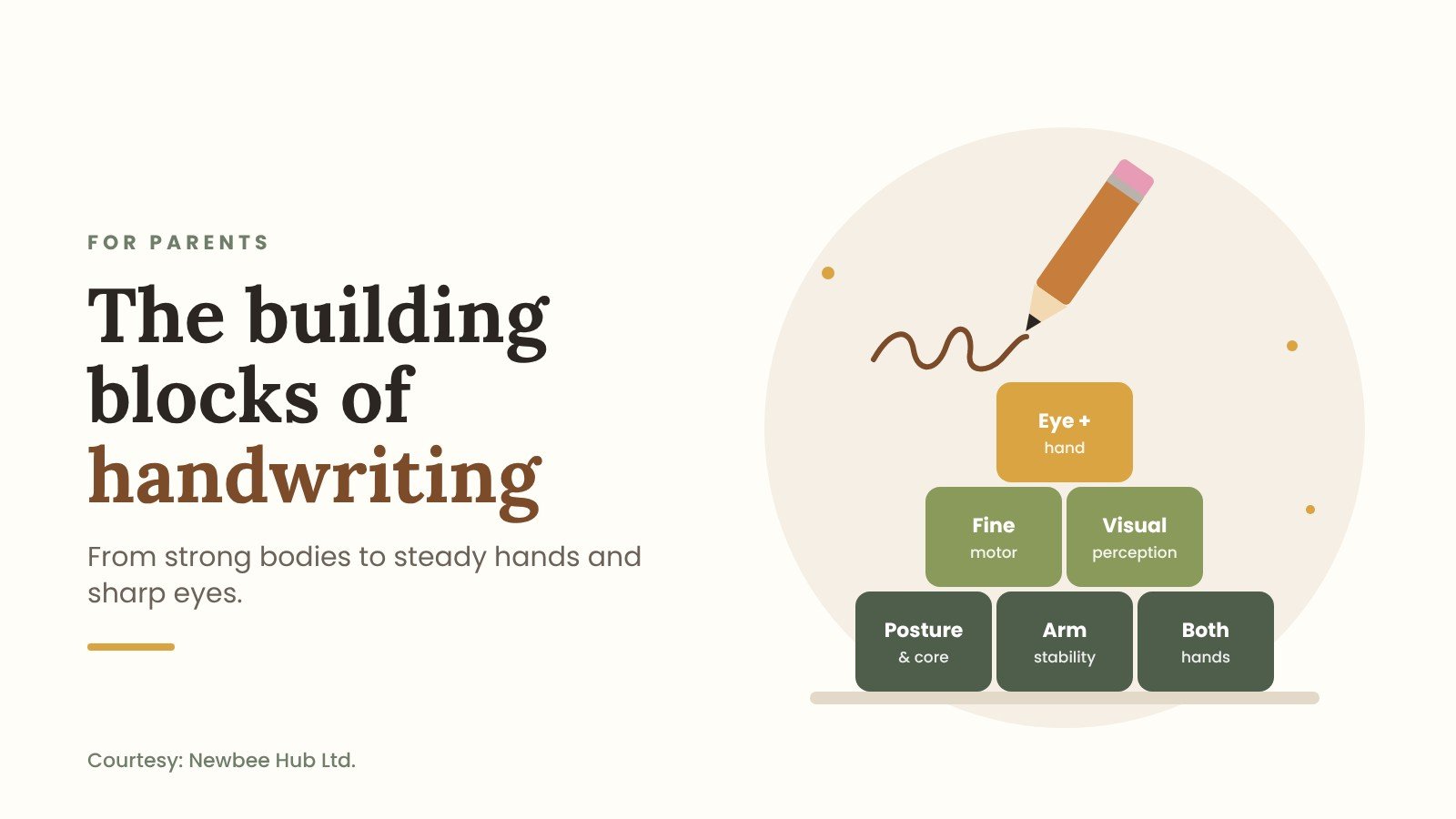
Good handwriting doesn't start with a pencil. It's built from posture, strong hands, sharp eyes and two sides of the body working together. Here's what's going on underneath, and how play can build it.
When a child's handwriting is messy, slow or tiring, the usual advice is "practise more". But handwriting is the very top of a tower of skills. If a block lower down is wobbly, more worksheets alone rarely fix it. Occupational therapists look at the whole tower, and parents can too.
The building blocks of handwriting
Think of handwriting as a house built from the ground up. Each block supports the one above it.
What each block does
1. Gross motor control and posture
Writing starts with the body. A child needs enough core strength to sit upright without slumping, so their arms and hands are free to move. Children who wriggle, lean on one elbow or prop their head up while writing are often working hard just to stay in position.
2. Shoulder, arm and wrist stability
A stable shoulder and wrist act like a steady base for the fingers. Without them, children tend to write from the whole arm, press too hard or tire quickly.
3. Bilateral coordination
Handwriting is a two-handed job: one hand writes while the other holds the paper still. Using both sides of the body together, and settling on a preferred hand, develops through everyday play like cutting, threading and building.
4. Fine motor skills and the pincer grasp
Fine motor skills are the small, precise movements of the hands and fingers. The pincer grasp (thumb and index finger working together) is the foundation of a good pencil grip. Children also need finger strength, the ability to move each finger separately, and "in-hand manipulation": moving a pencil within one hand without using the other.
5. Visual perception, including distance and depth
Before a child can write a letter, their brain has to see it accurately: its shape, its size, which way it faces, and where it sits on the line. Judging distance and space helps them leave gaps between words, keep letters on the line and copy from the board to their page.
6. Visual-motor integration (VMI)
Visual motor integration is where it all comes together: the eyes guide the hand to reproduce what they see. Research has consistently linked VMI and fine motor skills with handwriting quality in school-age children (Feder & Majnemer, 2007).
How pencil grip develops
A mature pencil grip doesn't appear overnight. Most children move through these stages, and many only master the "dynamic tripod" grip by about six or seven (Aneurin Bevan University Health Board, NHS Wales).
Pre-writing skills: shapes before letters
Letters are made from lines, circles and diagonals. Most children can copy these simple shapes in a fairly predictable order, and this is a useful guide to when they're ready for letters. A child who can copy a diagonal cross and a triangle usually has the control needed for most letters.
Spot the wobbly block: signs and play ideas
Here's what each difficulty can look like, and simple screen-free play that builds the skill underneath.
| Building block | You might notice | Play that helps |
|---|---|---|
| Posture & gross motor | Slumping, leaning on the desk, tiring quickly | Lying on the tummy to draw, wheelbarrow walks, climbing, swimming |
| Shoulder & wrist stability | Writing from the whole arm, very heavy or very light pressure | Painting on an easel or wall, animal walks, monkey bars, rolling pastry |
| Bilateral coordination | Paper slides around, swapping hands mid-task | Cutting with scissors, threading beads, Lego, clapping games |
| Fine motor & pincer grasp | Awkward grip, sore hand, messy colouring | Pegs, tongs, playdough pinching, picking up beads or coins, spray bottles |
| Visual perception & depth | Reversed letters, no spaces between words, trouble copying from the board | Jigsaws, spot-the-difference, mazes, catching and throwing games |
| Visual-motor integration | Wobbly shapes, letters different sizes, drifting off the line | Dot-to-dots, tracing, copying patterns, drawing shapes in sand or shaving foam |
What screens can take away
Tapping and swiping use very different movements from holding a pencil. When more play, drawing and making happens on a screen, children get fewer chances to build hand strength, grip and eye-hand control.
How handwriting is assessed
If you're concerned, an occupational therapist can assess your child's handwriting and the skills underneath it. You may hear of these standardised assessments, which professionals often use together:
| Assessment | Ages | What it looks at |
|---|---|---|
| Beery VMI (Developmental Test of Visual-Motor Integration) | 2 years to adult | Copying shapes; also tests visual perception and motor coordination separately |
| ETCH (Evaluation Tool of Children's Handwriting) | School age | Legibility and speed in classroom-style tasks, plus grip and pressure |
| Minnesota Handwriting Assessment | First and second class | Legibility, speed, letter formation and grip |
| The Print Tool | Preschool to about age 12 | Letter and number formation, size, spacing and placement |
| DASH (Detailed Assessment of Speed of Handwriting) | 9–16 years | Handwriting speed and fluency, often used for exam access arrangements |
| BOT-2 (Bruininks-Oseretsky Test of Motor Proficiency) | Children and teens | Fine and gross motor skills, used alongside a handwriting test |
No single test tells the whole story. A good assessment looks at how your child writes, the skills underneath, and how handwriting affects their schoolwork and confidence.
How Newbee books build these skills at home
We designed our handwriting, cursive and confidence books to strengthen the blocks underneath handwriting, not just to fill pages with letters. Each one follows the same path the tower does: from big movements and shapes, to letters, to joined-up writing, with confidence built in along the way.
Step 1: Getting ready to write (ages 3–6)
Tracing, mazes, colouring and shape activities build pencil control, fine motor skills and visual-motor coordination before letters begin.
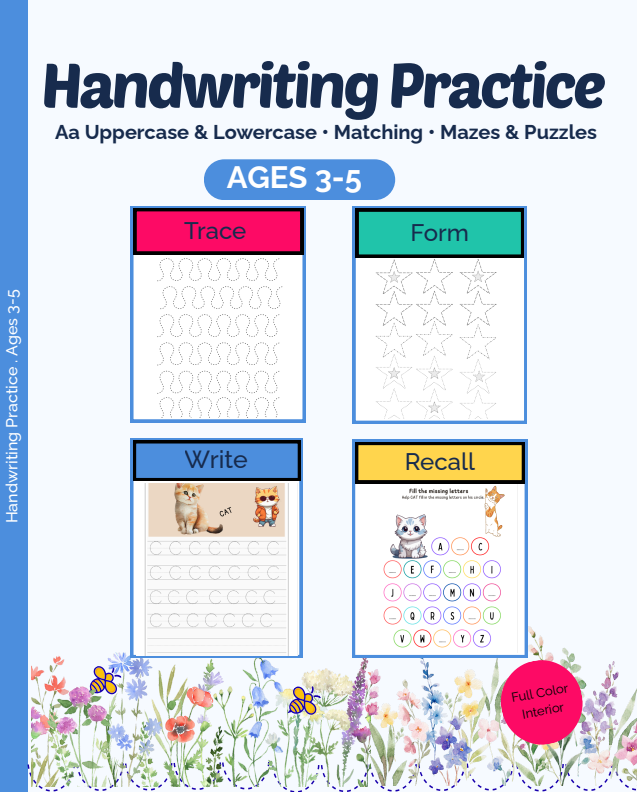
Handwriting Practice for Little Hands 3–5
Letter tracing, mazes and puzzles for fine motor skills.
View on Amazon ↗
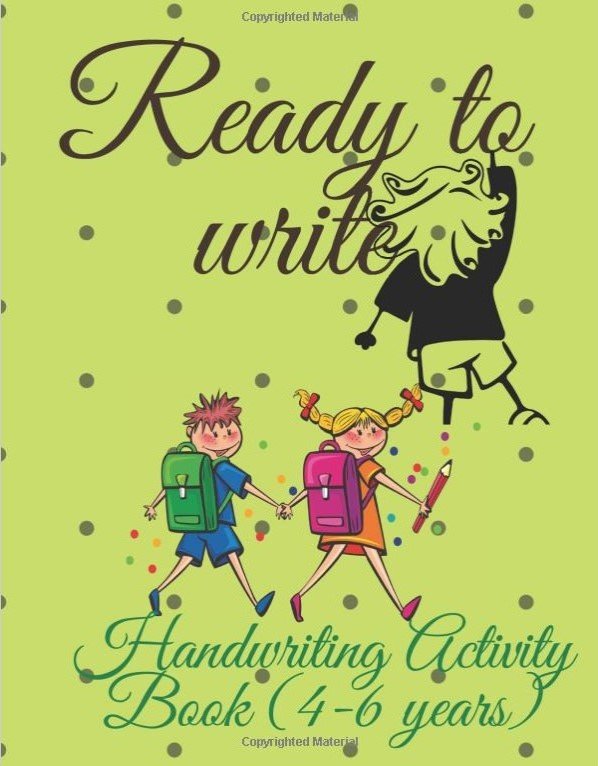
Handwriting Activity Book 4–6
Builds visual-motor coordination and motor control through creative activities.
View on Amazon ↗Step 2: Improving handwriting (ages 6–10)
Activities move from simple to complex shapes, strengthening fine motor skills and visual-motor coordination alongside problem-solving.
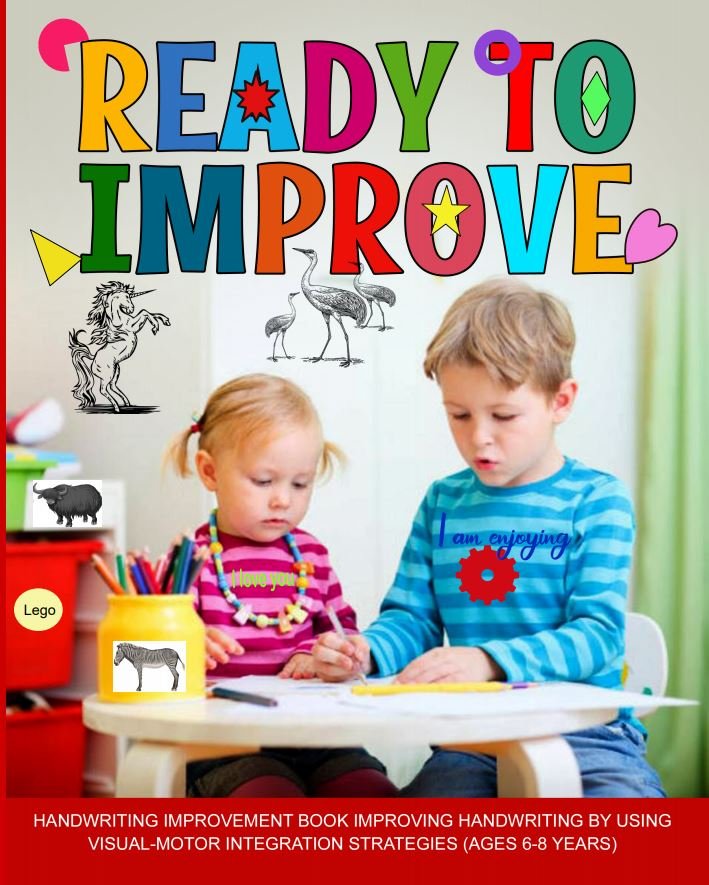
Ready to Improve Handwriting 6–8
Targeted practice for children whose handwriting is a struggle.
View on Amazon ↗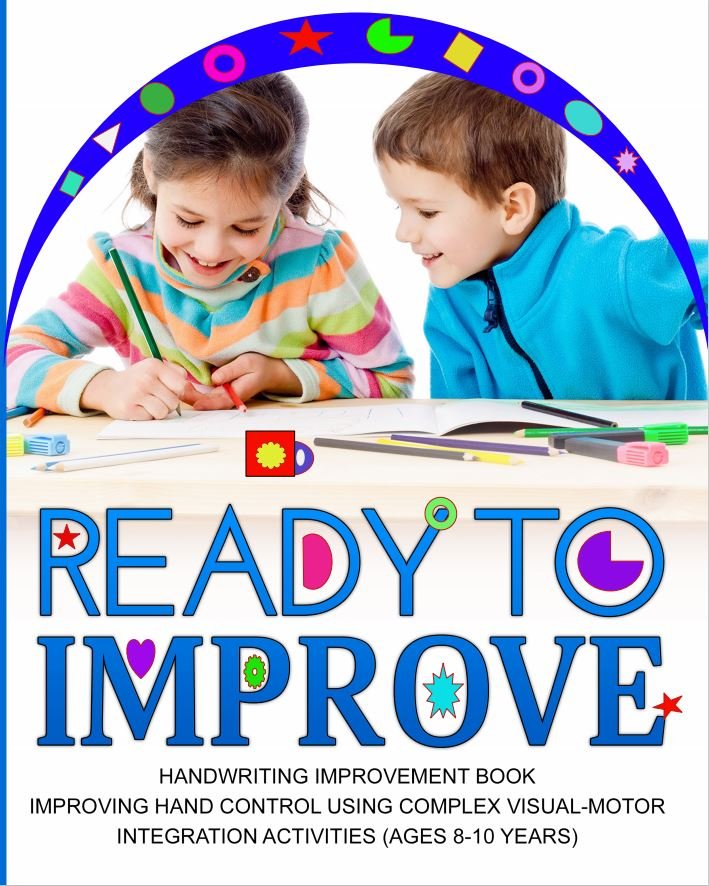
Ready to Improve Handwriting 8–10
Simple to complex shapes for fine motor skills, VMI and confidence.
View on Amazon ↗Step 3: Cursive with confidence
Our cursive books pair joined-up handwriting practice with positive affirmations, so every line a child writes is also something kind to say to themselves.
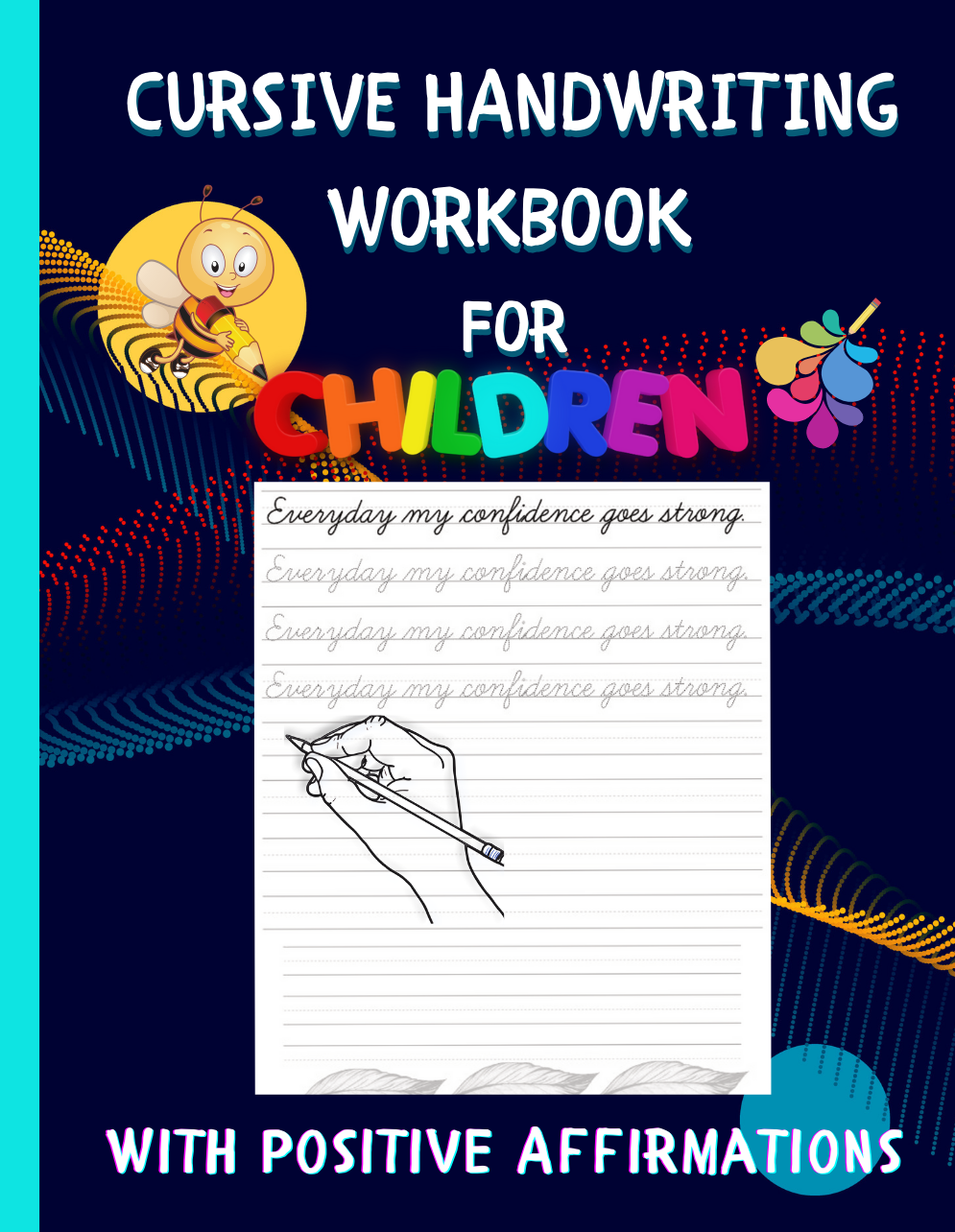
Cursive Handwriting with Positive Affirmations
Cursive practice that nurtures a growth mindset.
View on Amazon ↗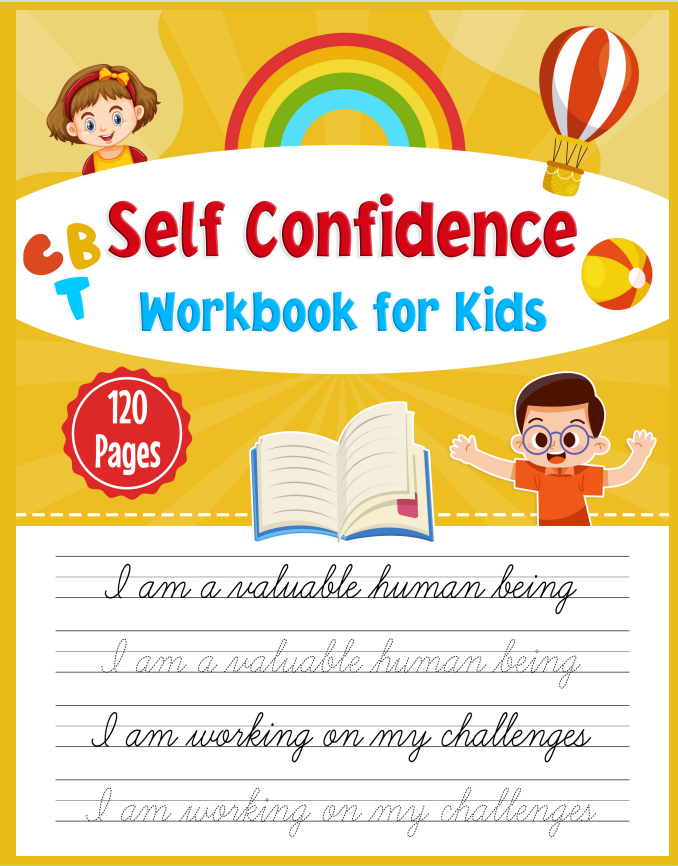
Cursive Handwriting to Boost Self-Confidence
Repeated positive statements to reinforce self-belief.
View on Amazon ↗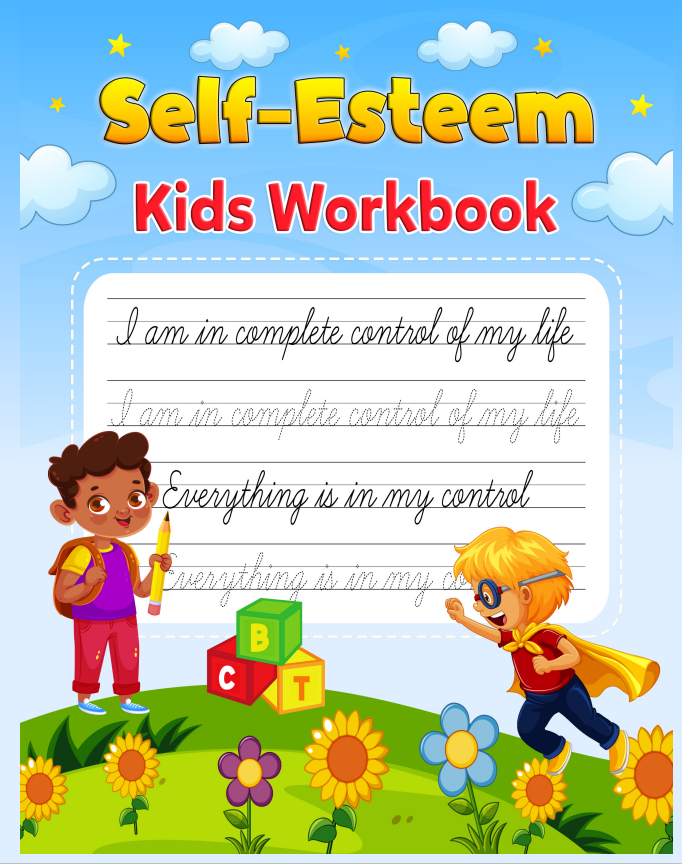
Cursive Handwriting to Improve Self-Esteem
Cursive affirmations to build self-esteem.
View on Amazon ↗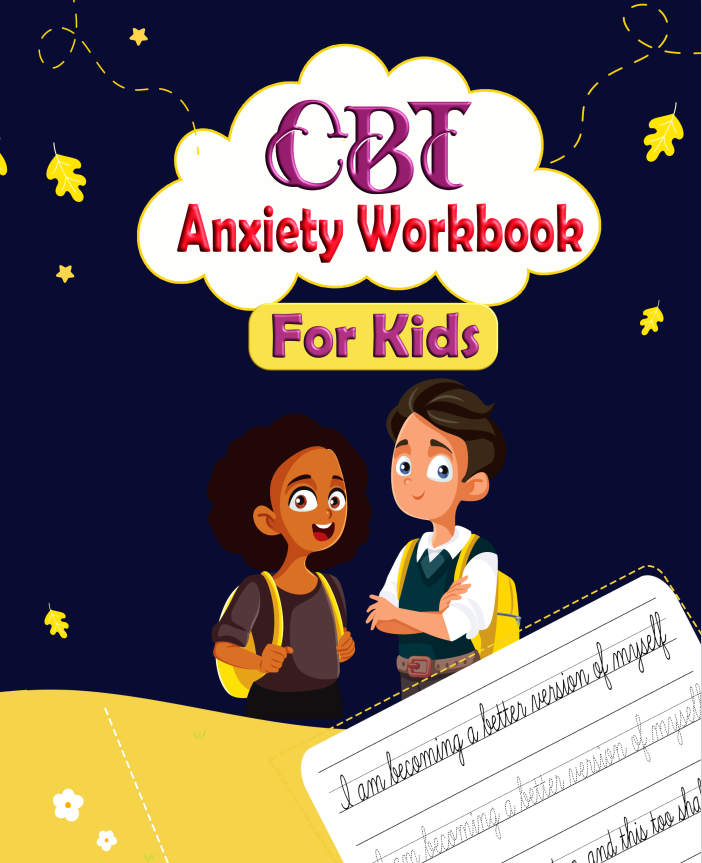
Cursive Handwriting with Activities to Reduce Anxiety
Handwriting and affirmations as calming coping skills.
View on Amazon ↗Five tips to improve handwriting at home
- Start big. Draw shapes on a wall, easel or in the air before shrinking them onto paper.
- Strengthen hands through play. Playdough, pegs, Lego and tongs build the pincer grasp without feeling like practice.
- Check the set-up. Feet flat, table at elbow height, paper slightly tilted, the other hand holding it steady.
- Little and often. Ten relaxed minutes a day beats an hour of tears at the weekend.
- Praise effort, not neatness. Confidence keeps children trying, and trying is what builds skill.
If handwriting stays very hard despite practice, or your child is in pain, avoiding writing or falling behind, speak to their teacher and ask about an occupational therapy assessment. You may also find our guide to dyspraxia in children helpful.
This article is for general information only and does not replace advice from a qualified health or care professional.
Sources: Feder, K.P. & Majnemer, A. (2007). Handwriting development, competency, and intervention. Developmental Medicine & Child Neurology, 49(4), 312–317 · Aneurin Bevan University Health Board, Children's Occupational Therapy (NHS Wales). Developing a tripod grasp · Beery, K.E. & Beery, N.A. Beery VMI, Pearson · Van der Weel, F.R. & Van der Meer, A.L.H. (2024). Handwriting but not typewriting leads to widespread brain connectivity. Frontiers in Psychology, 14 · Barnett, A. et al. (2007). DASH: Detailed Assessment of Speed of Handwriting. Pearson.
Image courtesy: Newbee Hub Ltd.