
Music and Memory: Why Music Is the Brain's Different Operating System for Learning
We fill children's days with more and more information. But learning isn't about how much goes in; it's about how much stays. Here's why music may be one of the most natural memory tools a child has.
As an occupational therapist, I'm often asked how to help a child "learn more". My answer usually surprises parents: most children don't need more information. They need better ways to hold on to what they've already met. And one of the oldest, most universal tools for that is something almost every child already loves: music.
7,000 languages, a handful of browsers
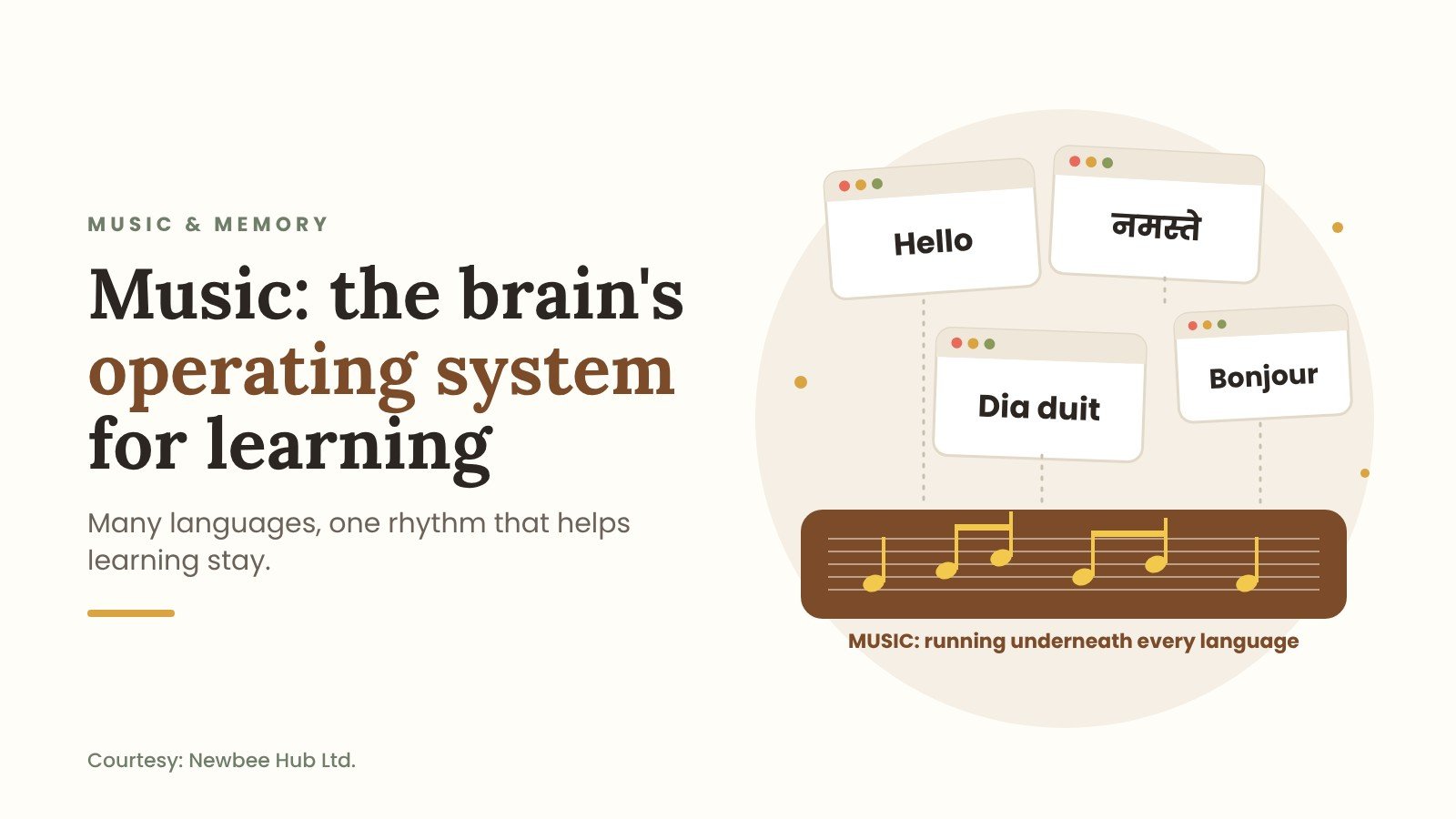
There are around 7,000 living languages in the world, yet most of us reach the entire internet through just a handful of web browsers. I find this a helpful way to think about language processing in the brain.
Each language is like a browser: a different window onto the same world of meaning. English, Hindi, Irish or French each have their own sounds, grammar and rules, and a child has to learn how each one works. A bilingual child is simply running two browsers.
But underneath every browser sits an operating system that keeps everything running. My argument is that music works more like that operating system than like another browser.
Music: a different operating system
Why call music an operating system? Three reasons.
It's universal. A major study of 315 societies around the world found music in every single one, with songs for similar purposes, like lullabies, dancing and healing, sharing recognisable features across cultures (Mehr et al., 2019). You need a separate "browser" for each language, but music crosses borders.
It runs many systems at once. When a child sings and claps along, they're hearing patterns, moving to a beat, remembering words and feeling something, all at the same time. Few other activities engage so many parts of the brain together.
It works underneath language. Rhythm and melody help the brain split speech into chunks and predict what comes next. Researchers have linked rhythm and musical skills with the listening and sound-awareness skills children need for reading (Tierney & Kraus, 2013).
Retention, not just more information
Our schools and screens pour information into children. But a full jug isn't the same as a full memory. What matters is retention: how much stays, and whether a child can find it again when they need it.
Music gives information "hooks" to hang on. Think of how easily you still remember the alphabet song, or an advert jingle from decades ago. In one study, adults learning phrases in an unfamiliar language (Hungarian) remembered them better when they had learned them by singing than by speaking or rhythmic speaking (Ludke, Ferreira & Overy, 2014).
What music won't do
It's important to be honest. Music lessons won't turn a child into a genius. A large review of 54 studies with nearly 7,000 children found that, in well-designed studies, music training didn't raise general intelligence or school grades (Sala & Gobet, 2020).
That's not a reason to skip music. It's a reason to use it well: not as a shortcut to higher marks, but as a natural memory aid, a calm-down tool, and a source of joy and confidence that keeps children wanting to learn.
Five ways to use music for learning at home
| To help with… | Try this music hook |
|---|---|
| Times tables and facts | Chant them to a steady beat, or set them to a tune your child already knows |
| Spellings | Sing the letters to a simple melody, clapping each letter |
| A new language | Learn key phrases through children's songs in that language, and sing them together |
| Daily routines | Use the same short song for tidying up, brushing teeth or getting ready for school |
| Calm and focus | Slow music with gentle breathing or stretching before homework or bedtime |
Keep it playful. The goal isn't performance: it's giving your child's brain one more way to hold on to what they learn.
Books to support how your child learns
At Newbee Publication, our books focus on how children learn, not just what they learn.
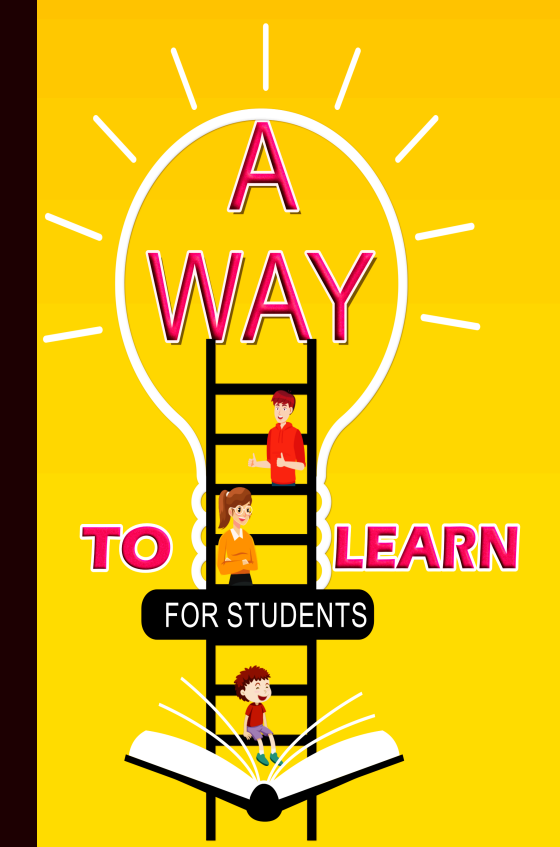
A Way To Learn: Learning Strategies
Helps children understand how they learn best, with practical study strategies.
View on Amazon ↗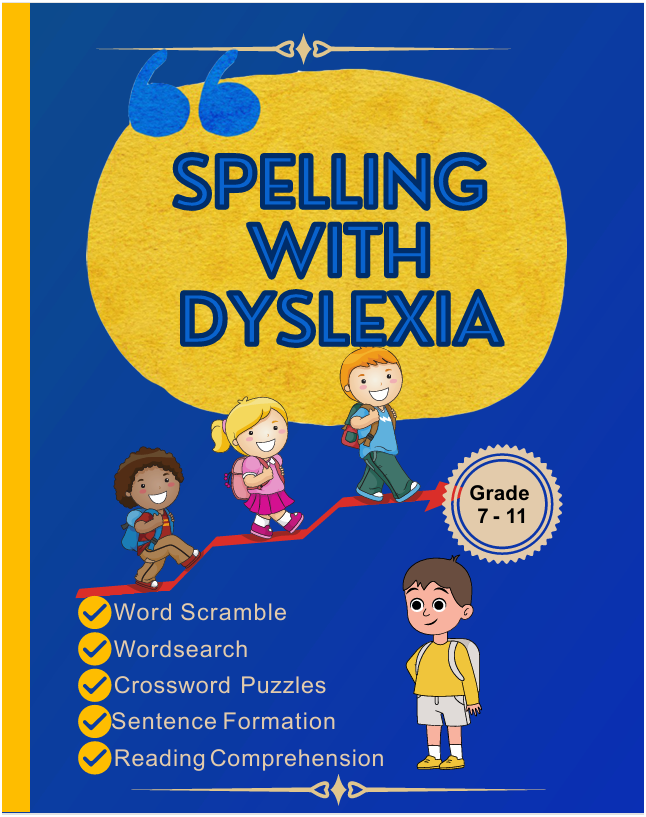
Spelling with Dyslexia
Structured spelling practice for children who learn differently. Try pairing it with spelling songs.
View on Amazon ↗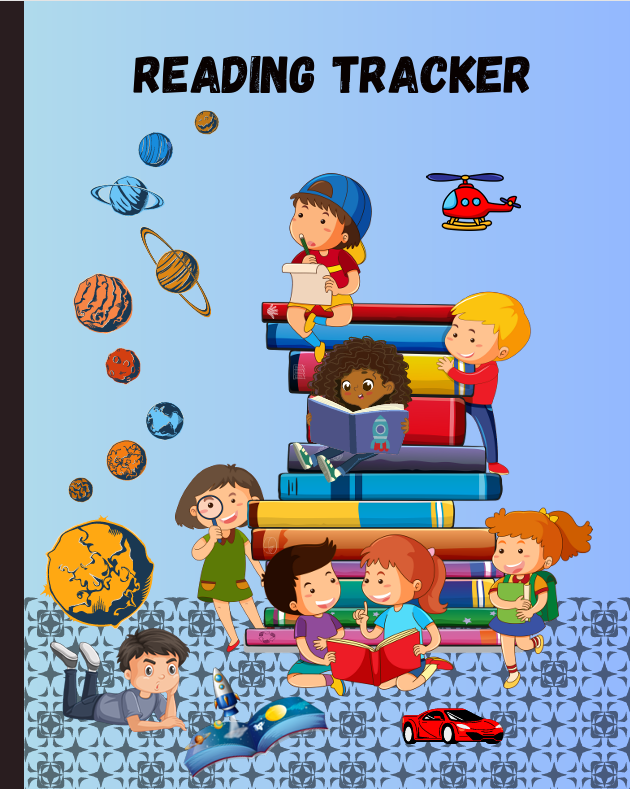
Track Book Reading and Give Reviews
Builds a daily reading habit and helps children reflect on what they've read.
View on Amazon ↗
Yoga Book for Children
Movement and calm. Add music for a rhythm-and-breathing routine.
View on Amazon ↗The bottom line
Children don't need more information poured in. They need ways to make learning stick. Languages are the browsers; music runs underneath them all. A little more singing, clapping and rhythm in your child's day could help more of their learning stay.
Sources: Mehr, S.A. et al. (2019). Universality and diversity in human song. Science, 366(6468) · Tierney, A. & Kraus, N. (2013). Music training for the development of reading skills. Progress in Brain Research, 207 · Ludke, K.M., Ferreira, F. & Overy, K. (2014). Singing can facilitate foreign language learning. Memory & Cognition, 42(1), 41–52 · Sala, G. & Gobet, F. (2020). Cognitive and academic benefits of music training with children: a multilevel meta-analysis. Memory & Cognition, 48(8), 1429–1441.
Image courtesy: Newbee Hub Ltd.